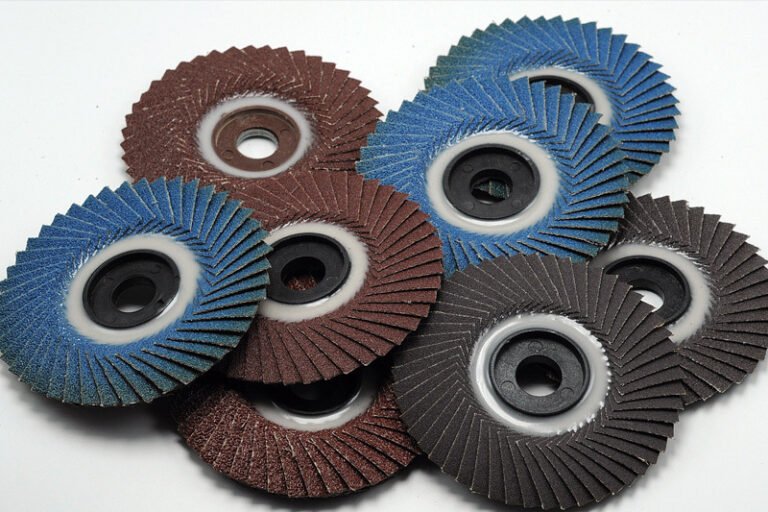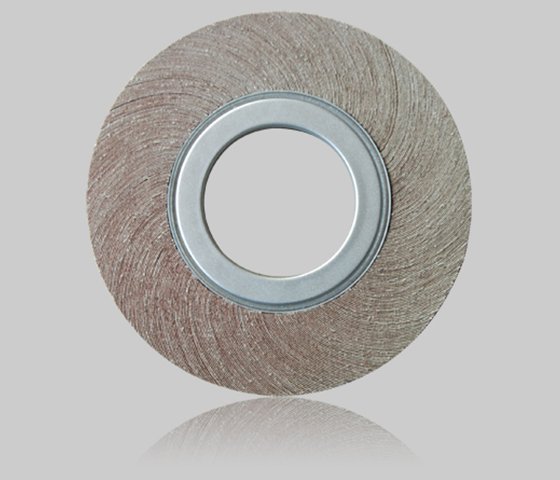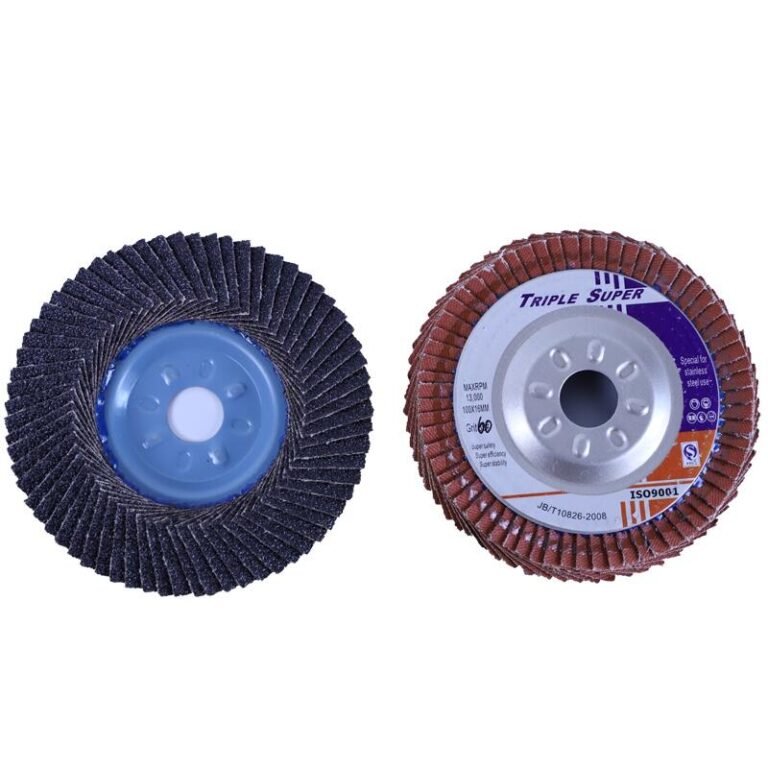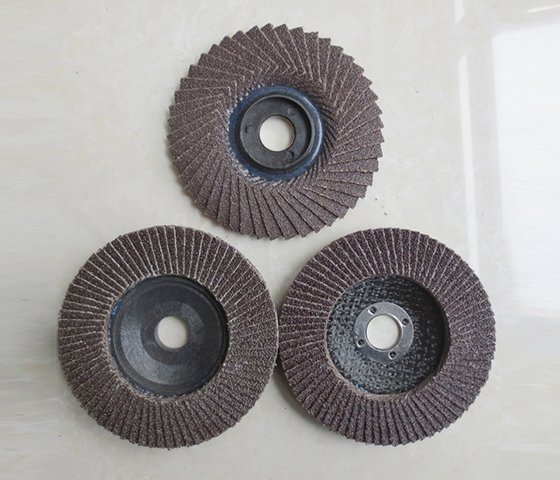






The thousand-sheet wheel is a powerful tool for surface treatment, widely used in the grinding and polishing of industrial products. It can be found in many industries. There are six common polishing methods for it:
Magnetic abrasive polishing: Magnetic abrasive polishing involves using magnetic abrasives to form an abrasive brush under the influence of a magnetic field, which is then used to grind and polish workpieces. This method offers high processing efficiency, excellent quality, easy-to-control processing conditions, and comfortable working conditions. With the use of suitable abrasives, the surface roughness can achieve a value of Ra0.1μm.
II. Electropolishing: The basic principle of electropolishing is similar to that of chemical polishing, which involves selectively dissolving the tiny protrusions on the surface of the material to achieve a smooth surface. Compared to chemical polishing, electropolishing can eliminate the influence of cathodic reactions, resulting in better effects. The electrochemical polishing process is divided into macro-level leveling and micro-level leveling.
III. Ultrasonic Polishing: Place the workpiece in an abrasive suspension and expose it to an ultrasonic field. Relying on the oscillating effect of ultrasonic waves, the abrasive is ground and polished on the surface of the workpiece. Ultrasonic machining exerts minimal macro forces, thus causing no deformation to the workpiece, but the fabrication and installation of tooling are more challenging. Ultrasonic machining can be combined with chemical or electrochemical methods.
IV. Mechanical polishing: Mechanical polishing is a method of obtaining a smooth surface by removing protrusions after polishing through plastic deformation of the material surface. It generally uses oilstone bars, wool wheels, sandpaper, sand belts, nylon wheels, etc., and is mainly performed manually. For special parts such as the surface of a rotating body, auxiliary tools such as turntables can be used. For parts with high surface quality requirements, ultra-precision polishing methods can be adopted.
V. Chemical Polishing: Chemical polishing involves dissolving the protruding micro-surface portions of a material in a chemical medium preferentially over the recessed portions, thereby achieving a smooth surface. The main advantage of this method is that it does not require complex equipment, can polish workpieces with complex shapes, can polish many workpieces simultaneously, and is highly efficient. The core issue of chemical polishing is the preparation of the polishing solution.
VI. Fluid Polishing: Fluid polishing relies on the high-speed flow of liquid and the abrasive particles it carries to scour the surface of the workpiece, achieving the purpose of polishing. Common methods include: abrasive diamond sand jet machining, liquid jet machining, and fluid dynamic grinding. Fluid dynamic grinding is driven by hydraulic pressure, causing the liquid medium carrying abrasive particles to flow back and forth at high speed across the surface of the workpiece.
Polishing does not enhance the dimensional accuracy or geometric shape precision of the workpiece; rather, its primary objective is to achieve a smooth surface or mirror-like luster. It is a crucial step in the process of using a thousand-page wheel for machining.